Helping children build confidence and independence through purposeful play
Peg in the Egg®
The OT-designed play system that helps children develop hand skills, coordination, and emotional awareness through play.
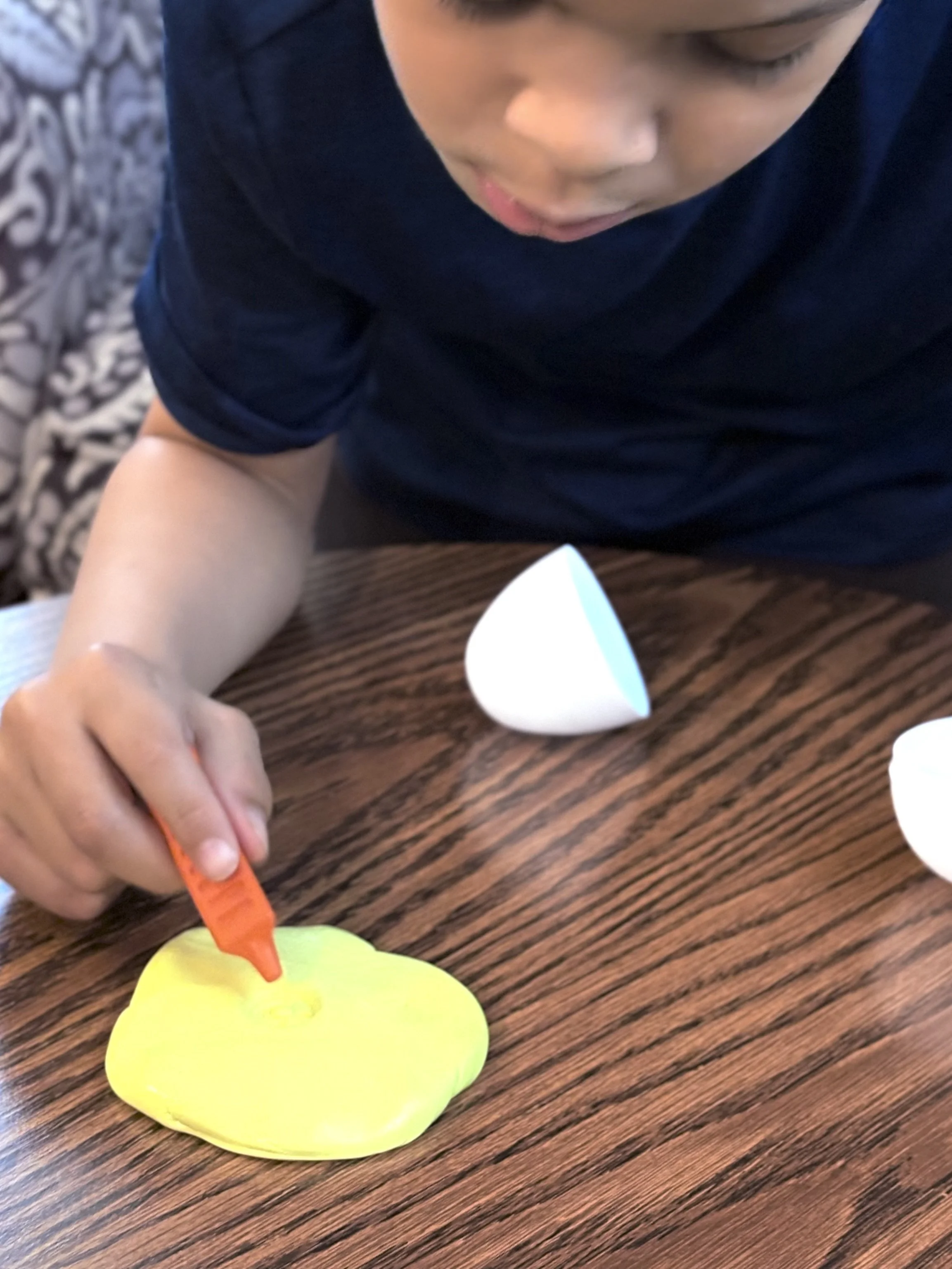
Kids love putty. Peg in the Egg® transforms that favorite sensory experience into a creative, hands-on activity where children can build, imagine, explore, and develop the skills they need for everyday participation.
Designed by a Board-Certified Pediatric Occupational Therapist, Peg in the Egg® supports the foundational hand and emotional regulation skills children use for drawing, cutting, self-care, construction play, handwriting, classroom activities, and life.
Safety tested by TÜV Rheinland (ages 3+) • Designed by a Board-Certified Pediatric Occupational Therapist • Utility patent-protected innovation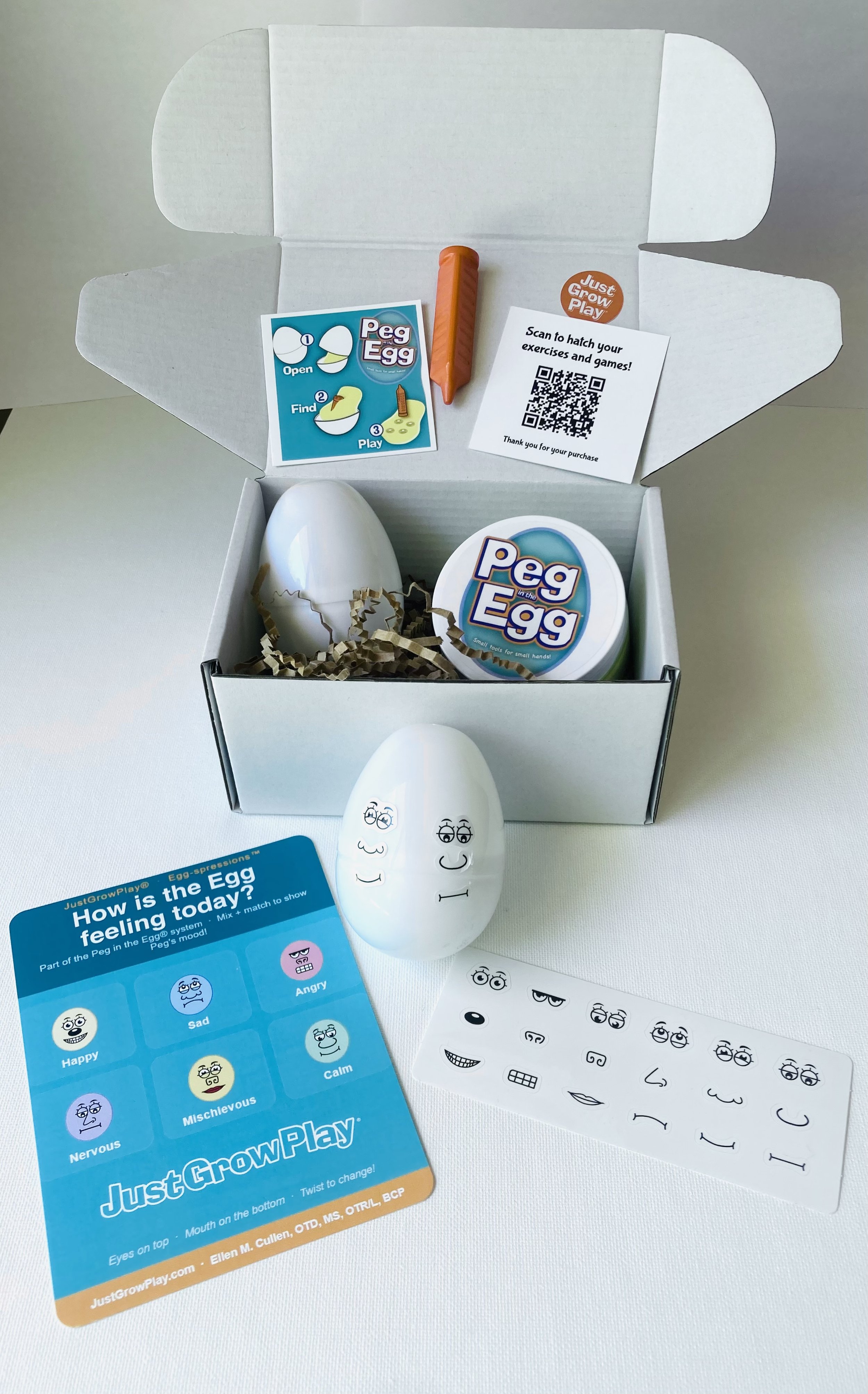
Peg in the Egg®
Most putty builds strength. Peg in the Egg® builds participation.
Children learn best through meaningful play. Peg in the Egg® transforms therapy putty into purposeful, occupation-based play that develops the hand skills children use every day. Each Egg-ercise™ provides engaging opportunities to develop coordination, dexterity, precision, and motor control while participating in occupations such as writing, drawing, cutting, dressing, building, and classroom activities.
Add Egg-spressions™, and every activity becomes an opportunity to develop emotional awareness and practice self-regulation through play. Together, these playful experiences help children build the confidence and skills to participate more fully at home, at school, and in everyday life.
Why it works
🎨 Creativity through play
Children squeeze, shape, build, and create while developing coordination and confidence through open-ended play.
✏️ Pencil readiness
Encourages exploration of functional grasp patterns while developing the hand skills needed for drawing and writing.
💪 Strength with purpose
Combines graded resistance with purposeful activities that build hand strength, dexterity, coordination, and endurance.
❤️ Emotional awareness
Egg-spressions™ provides opportunities to identify feelings, practice calming strategies, and connect through play.